Rebound Hammer Test
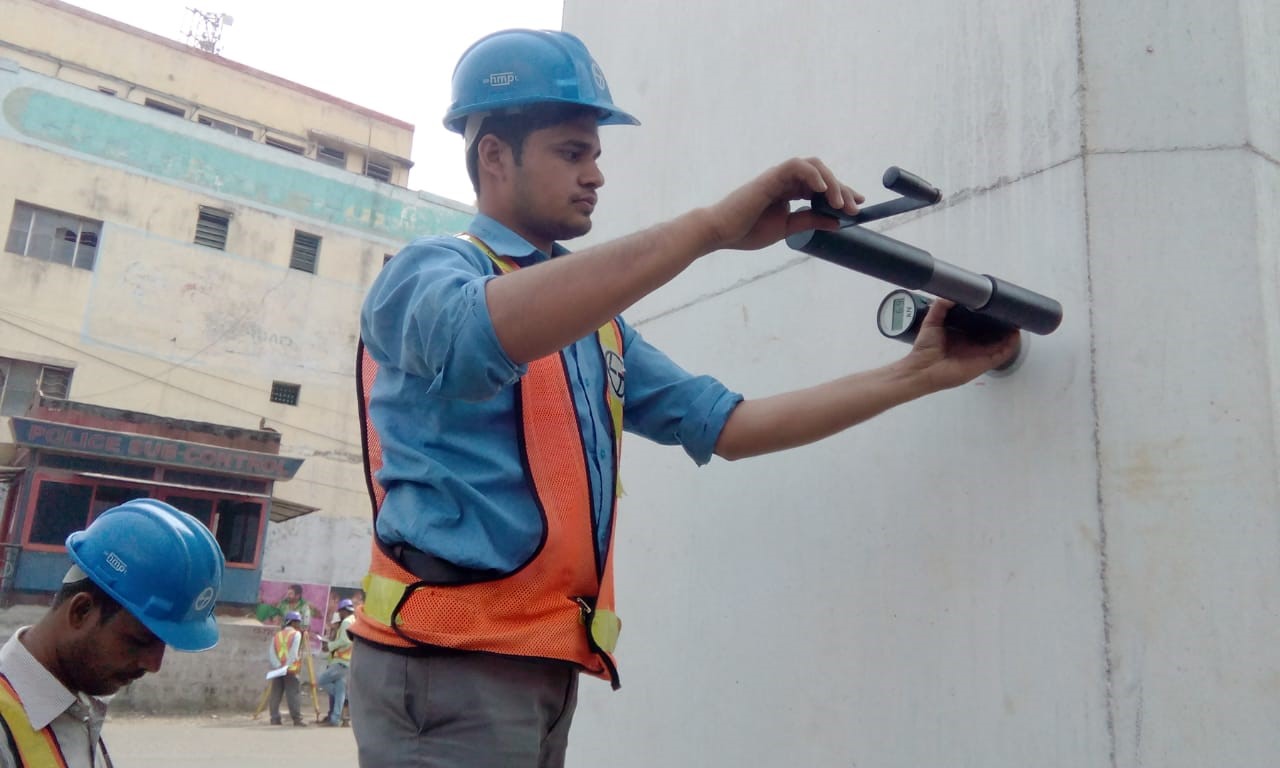
Rebound Hammer test measures the surface hardness of concrete with approximate correlations to estimate the CAPO Test services of the structure. Although the intrinsic limitations of the test may result in large variations in the estimated strength, ease of conducting the test and low initial cost has made the test quite popular.
Rebound Hammer tests are conducted in accordance with IS: 13311 Part II standard.
Avantech Engineering Consortium has been undertaking health monitoring projects for power plants, real-estate developers, construction agencies etc. and carrying out Rebound Hammer Tests as per the project requirements.
Core Tests
Core tests involve taking the actual core samples from the structure using the diamond core cutting bits and subjecting the cores to compressive loading in the Compression Testing Machines, followed by the visual inspection.
Core tests are conducted in conformance with the guidelines laid out in IS: 456.
Avantech Engineering has been undertaking testing of cores as a part of health assessment of existing buildings.
Frequently Asked Questions
1. What are CAPO Test Services?
CAPO Test Services involve conducting Cut and Pull Out (CAPO) tests to estimate the in-situ compressive strength of concrete in existing RCC structures. The method helps engineers assess concrete strength in buildings, bridges and other infrastructure without relying only on laboratory test specimens.
2. How does the CAPO Test work?
The CAPO test involves preparing a test location on the concrete surface, installing an expandable steel ring in a drilled recess and applying a controlled pullout force. The force required to pull out the ring is measured and used with an appropriate correlation to estimate the in-situ compressive strength of concrete.
3. Why is the CAPO Test important for existing concrete structures?
CAPO testing helps engineers evaluate the in-situ strength of existing concrete structures. It can support structural condition assessments, rehabilitation planning, quality investigations and decisions about the condition of buildings, bridges and other RCC structures.
4. Which standards are followed for CAPO testing?
CAPO testing procedures are covered under ASTM C900 and EN 12504-3. The applicable procedure and testing requirements should be selected according to the project specifications and site conditions.
5. Where are CAPO Test Services commonly used?
CAPO Test Services are commonly used for existing buildings, bridges, flyovers, industrial structures, RCC columns, beams and concrete slabs. The test is useful when engineers need information about the in-place strength of concrete.
6. What is the difference between CAPO testing and rebound hammer testing?
CAPO testing uses a post-installed pullout method to estimate in-situ concrete compressive strength, while rebound hammer testing measures surface hardness and uses correlations to estimate concrete strength. Both methods provide different information and should be selected according to the assessment requirements.
7. How can I find reliable CAPO Test Equipment Suppliers in India?n RCC structures?
When selecting CAPO Test Equipment Suppliers in India, consider equipment suitability, measurement reliability, technical support and compatibility with the required testing procedure. Avantech Engineering Consortium Pvt. Ltd. provides CAPO test equipment and testing services for concrete strength assessment applications.