Frequently Asked Questions
1. What is a Hollow Cylinder Testing System?
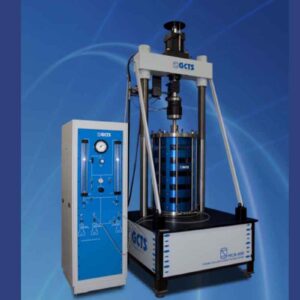
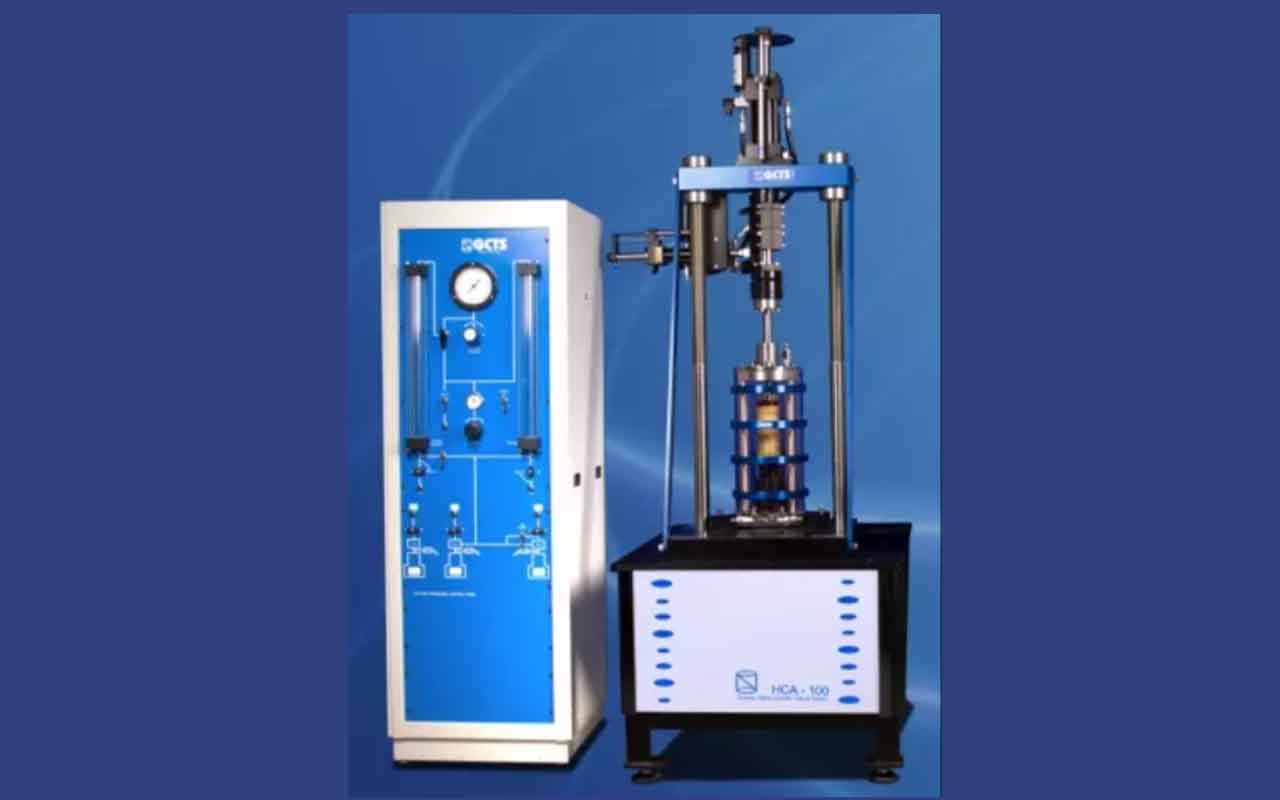
A Hollow Cylinder Testing System is an advanced geotechnical laboratory testing machine used to study the mechanical behaviour of soil under different stress and strain conditions. It helps researchers investigate soil anisotropy, principal stress rotation, shear strength and deformation characteristics.
2. What is the GCTS HCA-100 Dynamic Hollow Cylinder Testing System used for?
The GCTS HCA-100 is used for advanced soil mechanics investigations, including dynamic shear strength, liquefaction potential, plane strain, simple shear, shear modulus and deformation testing.
3. What types of tests can be performed using the HCA-100?
The HCA-100 supports static and dynamic hollow cylinder testing. It can perform tests related to soil anisotropy, principal stress rotation, simple shear, plane strain, liquefaction potential, dynamic shear strength and shear modulus.
4. What is the axial load capacity of the HCA-100?
The GCTS HCA-100 offers an axial load capacity of up to ±25 kN and torsional load capacity of ±225 N-m, according to the product specifications listed by Avantech.
5. What specimen sizes are supported by the HCA-100?
The standard system supports hollow soil specimens with a 100 mm outside diameter and 63.5 mm inside diameter. Other specimen configurations, including 100/50 mm, 150/75 mm, 200/100 mm and 300/150 mm outside-to-inside diameters, are also available.
6. How does a Hollow Cylinder Apparatus help study soil anisotropy?
A Hollow Cylinder Apparatus allows researchers to control axial loading, torsional loading and pressure conditions. This makes it possible to investigate the effects of principal stress rotation and intermediate principal stress on soil behaviour.
7. Where can I buy a Dynamic Hollow Cylinder Testing System in India?
You can contact Avantech Engineering Consortium Pvt. Ltd. for information, technical specifications and quotations for the GCTS HCA-100 Dynamic Hollow Cylinder Testing System.